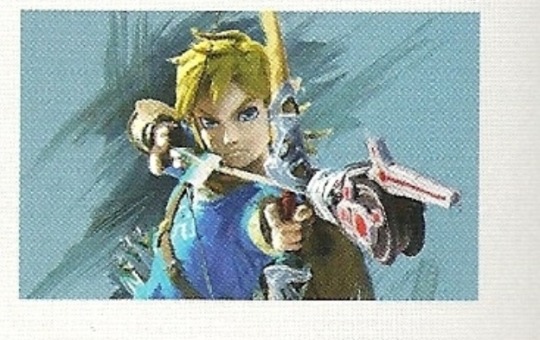
A tiny tidbit of news on The Legend of Zelda: Breath of the Wild. The recently released Hyrule Graphics art book in Japan reveals that the game’s art director is Satoru Takizawa. (Thanks, Nintendo Everything)
Takizawa art directed Twilight Princess, provided character designs for Ocarina of Time, and has also been involved with a number of other Nintendo projects over the years. Joining him as one of the art leads on Breath of the Wild is Takumi Wada, who last worked on The Legend of Zelda: Skyward Sword and was the natural choice for the newer game.
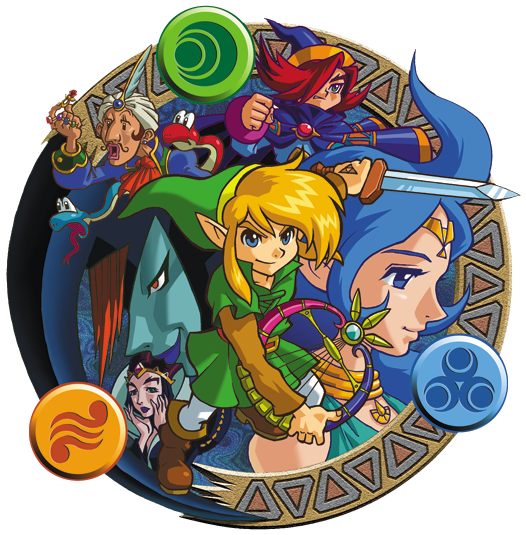
In an interview published in the art book, Wada reveals that he actually drew three versions of one of the early promotional images for Breath of the Wild, to experiment with different art styles. You can view these three variants above.
Eiji Aonuma has been part of The Legend of Zelda for close to two decades, usually in the role of director or producer. Given that he’s worked on the series for as long as he has, it isn’t surprising that he has, on occasion, voiced his desire to dabble in other, non-Zelda-related projects.
“I’m 50 now, so I only have about ten more years to make games at Nintendo. I want to try all sorts of new things before it’s too late—I don’t want to get to the end of my career and only have worked on Zelda. But every time I come up with some good new ideas, they end up being used in a Zelda game! I need a six-month break to get away from the Zelda cycle and focus on something new [laughs]. But I’d probably end up making a game that is similar to Zelda; after all, A Link to the Past was my biggest influence.” - Eiji Aonuma, 2013, EDGE (via NintendoLife)
Now, in a more recent interview with EDGE, Aonuma has once again expressed his interest in developing a game unrelated to Zelda, this time getting a little more into the specifics of just what he’s interested in.
“Actually, Nintendo has been telling me to create a new IP. But then, they’re also telling me to make more Zelda games. I can’t really share much; I’m not sure I’m allowed to say anything. But I really like the idea of a game where I can live as a thief. That’s all I’ll say.” - Eiji Aonuma, 2016, EDGE (via Nintendo Everything)
Given how guarded Aonuma is being, it stands to reason that he and Nintendo do plan to further investigate his thief game idea. Of course, given Aonuma’s involvement with Zelda, it would require someone to lighten his work load, freeing him up to pursue other projects.
Fishing mini-games have long been a part of The Legend of Zelda. The first game to include fishing was Link’s Awakening on the Game Boy.
The feature, according to the development team, was created by Kazuaki Morita, a programmer that has worked on a number of Zelda games, including the first. Morita, whose love for fishing is known among older Nintendo staff, is a board member at a company named SRD Co. Ltd., which takes on videogame development contracts. Since it shares its headquarters with Nintendo, it has worked on a number of Nintendo titles over the years, including Link’s Awakening.
In fact, the conceptualization of Link’s Awakening is actually credited in part to Morita himself, who nudged things along by getting ahold of the only Game Boy development kit at Nintendo at the time, and using it to prototype a Zelda-like game to see what the hardware could do.
Morita, as you might expect, also programmed the fishing game in The Legend of Zelda: Ocarina of Time. Here’s how he narrates the course of events that lead to its inclusion in that game:
Morita: The Water Temple is in Lake Hylia. Aonuma-san designed that dungeon. The boss that appears there is Morpha. Just when I was making that, there was a landform like a pool.
Iwata: Morpha rises up out of the pool and fights Link.
Morita: Right. When I was making that boss, I casually…
Iwata: “Casually”? (laughs) I doubt you had that kind of time!
Morita: But for some reason I did. (laughs)
Everyone: (laughs)
Morita: I just happened to have a model of a fish, so…
Iwata: You “just happened” to have it? (laughs)
Morita: Yes! (laughs) A model of a fish for putting in an empty bottle. I borrowed that and had it swim in the pool in the dungeon, and when I saw it swimming around, I thought, “Oh! I can go fishing!”
Iwata: What did you do for a fishing pole?
Morita: I took the model for something and made it a cylinder, and then… (gestures as if casting a fishing pole)
Haruhana: You used the motion for Link swinging his sword.
Morita: Yep. But at that time, it was just for my own enjoyment. You know, for when I needed to take a breather.
Iwata: How long did it take before the other project members discovered this?
Morita: Hmm, not long.
Aonuma: At first, I didn’t have any idea he was doing that.
Morita: Oh, that’s right. Aonuma-san came over and I was like, “Uh-oh!” and immediately closed the screen.
Everyone: (laughs)
Aonuma: Well, you were supposed to be making a boss!
Iwata: We had pushed back the project several times, so making a boss was pressing business. You should have been doing that! (laughs)
Morita: Nonetheless, for some reason, it just kept coming together and…
Iwata: “For some reason”?! Yeah, because you were pouring your energy into it! (laughs) Is it really that easy to make a fishing game?
Morita: Yeah. I didn’t have to put much effort into it.
Aonuma: Really…?
Morita: No, it’s true. And it turned out just as I imagined.
Aonuma: Oh, so you had a complete idea of it before you made it?
Morita: Yeah.
Fishing is, naturally, a part of Zelda: Breath of the Wild as well. In the new game, you can actually fish using bombs instead of a rod.
Note: This interview originally appeared as part of Nintendo’s Nintendo Online Magazine in Japan in 2001. The subject of the interview is The Legend of Zelda: Oracle of Seasons/Ages director Hidemaro Fujibayashi, who was a staff member of Capcom had previously designed Magical Tetris Challenge. Fujibayashi would later go on to direct The Legend of Zelda: Four Swords, The Minish Cap, Skyward Sword, and is also the director of Breath of the Wild.
Q: I hear that this new Zelda’s development began at Capcom.
Fujibayashi: Yes. From what I heard, our Okamoto [Executive Director Yoshiki Okamoto] told Mr. Shigeru Miyamoto, “I’d like to create a Zelda at Capcom.” That was about two years ago. After that, the staff without a project on their hands started to create a 2D game based on the Famicon Legend of Zelda. The concept was to convey the greatness of the Famicon generation Zelda to the current generation.
Q: Fujibayashi-san, were you a Zelda fan, too?
Fujibayashi: Yes. In the case of the Famicon game, I went straight to the toy store to buy it. I remember running to buy it, fist tight around my New Year’s money.
Q: Did you participate in the [Oracle] project from the get-go?
Fujibayashi: At first, I participated as a kind of secretary that put all the ideas together. Back then, I was only an open ear to the concepts being tossed about, but I gradually began to take part in the actual development of the game. The idea was first to make a presentation to Mr. Miyamoto, so I wrote a proposal based on Okamoto’s concept.
Q: Had the game’s contents already been decided upon at the time of the proposal?
Fujibayashi: The core of the game was pretty much decided. That is to say, the fact that it would be on the Game Boy Color, the use of the four seasons, and the decision to retain the feel of the 2D Zelda games. It was also decided that it would be a series, so I thought the link system up as a way to make use of that idea. I wanted, for example, that if you missed an enemy in the first game, you would encounter it in the next one. That’s the kind of game I wanted to make it. Zelda is a game with a solid world, so I thought we could express the characters’ “existence” like in the N64 games on the Game Boy, too.
Q: What was Miyamoto-san’s reaction?
Fujibayashi: That was my first time meeting him. I went to the presentation with Okamoto, but it was my first time working directly with him, too. And to top it off, he told me we were going to meet a well-known member from another company, so I ended up having palpitations. Miyamoto-san remained silent throughout the entire presentation, too, so I was quite nervous. But when we finished reading our proposal out to him, he said, “I had thought there’d be many loose ends and had planned to strike, but it looks like you’ve got a handle on things.” And he approved it, saying, “I think it’s fine.”
Q: Was that the signal for work to begin at Capcom?
Fujibayashi: Yes. Afterwards, I worked on the scenario while reporting regularly to Okamoto. I was the director and planner then.
Q: I heard that Capcom begins development by writing the scenario.
Fujibayashi: Yes. But I believe the Zelda series really only started to have scenarios after the hardware specifications improved. The original Zelda was a pure action-RPG and didn’t have much of a story to begin with. I wanted to combine both those aspects (action-RPG and an actual scenario) this time around. At first, we’d only planned on creating a game one-tenth the size of the final version. But it just kept growing as development progressed and gradually turned into an original game.
Q: Were Oracle of Seasons and Oracle of Ages developed by different teams?
Fujibayashi: No, we developed them one at a time with the same team. At first it was just me exchanging ideas with the scenario team. Then, as the scenario progressed, I discretely approached the Capcom artists and programmers I was interested in. This sort of HR thing is normally handled by my direct supervisor Funamizu [Producer Noritaka Funamizu] but I thought I’d best sound the staff off first. Funamizu scolded me saying “that’s my job,” but I still got the staff members I wanted to join the team.
Q: From then on it was probably the actual game creation that started, but could you give us a simple progress plan?
Fujibayashi: We began with a rough image of the game. After thinking up the topography, we created the map. After the rough map was done, we thought up the characters. We also altered the scenario as we made the game.
Q: Were there times when you would also redo the whole field?
Fujibayashi: Every day. When actually moving around in it, every time something felt wrong we’d end up correcting it. When we were about 60% done, Mr. [Yoichi] Yamada from Nintendo came in as a supervisor. From that point on, I was able to talk with Mr. Miyamoto. I then started absorbing the outlook he had on Zelda as my own.
Q: Are there any interesting stories regarding the joint development with Nintendo?
Fujibayashi: Back in the day, I’d play Nintendo games and think all their games had a common feel to them. When I met Mr. Miyamoto, I clearly understood that there’s a logic behind the games he thinks up. Understanding that was a huge learning experience for our team. Another thing was that Mr. Yamada and co. would ask us “What’s this character’s name?” about characters we’d just randomly put in the game. Giving those characters a name really brings them to life and the staff’s attachment to them evolves, too.
“You should name your characters”… such a simple sounding idea really opened my eyes to something important. This is just one example, but I feel like I was taught the secret to Nintendo’s “warm game feel”. What made me the happiest was that both Mr. Yamada and Mr. Miyamoto treated me as though I was a member of Nintendo. We talked not as Nintendo or Capcom staff, but as staff working together on the creation of a game. I believe that in the end, this kind of welcoming feeling influenced Zelda.
Q: At the same time, I do believe that this game is also Capcom-ish.
Fujibayashi: Rather than Capcom-ness, I believe it expresses the Capcom Zelda team’s personality. We used slightly deep characters in order to bring out the world’s appeal. It might just be the difference between Kyoto and Osaka [where Nintendo and Capcom’s main offices are located respectively] but the appearance of characters that are borderline outlaws might indeed be of Capcom-ish nature. However, ultimately I don’t believe there are any differences game system-wise.
Q: Please share with us an exclusive inside story about development.
Fujibayashi: There’s a “Dark Tower” in Oracle of Ages, with people made to work there. Their dialogue is along the lines of “There’s no end to this work” or “I can’t go home”. There were also team members that couldn’t go home much during development, so we put those characters in as a parody (laugh). But our team feels really cozy, so the general atmosphere was great. People who’d just come by with a message would end up in a meeting and chat with us for two hours before leaving again.
Q: That warmth might very well have slipped into the game. Well then, what would be the highlight of the Oracle series in your opinion?
Fujibayashi: This title was built upon the whole team’s personality. The highlight would be the many events and mini-games, as well as the dungeon gimmicks. We’ve thought up quite a few major gimmicks that would be feasible on the Game Boy. It’s packed with ideas from the whole team and is quite meaty.
Q: What would you recommend the link system for?
Fujibayashi: I believe that using the “password” and playing the two games as a continuation brings out a deeper feel to the world. It also lets you see the true ending after the story is over. New characters appear and there are definitely more events, so I would really recommend trying it out.
Translation by Claire Rouveyrol. Edited by Ishaan Sahdev. Images courtesy Nintendo.
A fun little tidbit of info from the past—The Legend of Zelda: Ocarina of Time took 40-50 internal Nintendo employees to develop, and more than double that figure when you account for external contractors.
“Forty of fifty. It’s the biggest development group I’ve ever had. We also have a programming company working closely with us. If I include those people, maybe 120 people are working on Zelda altogether.” - Shigeru Miyamoto, Nintendo Power vol. 111, 1998
Leap 18 years into the future, and The Legend of Zelda: Breath of the Wild development team is over twice as large as Ocarina’s. The core team consists of over 100 staff, while the full list of people working on the game amounts to over 300. (Thanks, @NStyles)
At Nintendo’s 76th Annual General Meeting of Shareholders, The Legend of Zelda creator (and Nintendo’s “creative fellow”) Shigeru Miyamoto was asked to comment upon the increasing costs and timelines involved with game development.
While Nintendo do not release transcripts of their General Meetings of Shareholders, Twitter user @NStyles—who attends these meetings in Kyoto—was able to share a summary of Miyamoto’s response.
Upon being asked for his comment on increasing development costs alongside Nintendo’s other directors, Miyamoto shared that over 100 people are working directly on The Legend of Zelda: Breath of the Wild. He added that when you take into account the full list of people that will eventually appear in the game’s credits, the number is 300. (Note: This obviously includes companies to which Nintendo outsource asset creation and other functions of development.)
The cost of developing the game, Miyamoto went on to say, would be recovered by Breath of the Wild selling in excess of 2 million units. Additionally, the effort that went into developing the game would assist in the development of future projects. Whether Miyamoto is talking about re-using technology developed for the game or simply the know-how acquired during development (or both) at this precise moment is unclear.
A follow-up comment by Shinya Takahashi, General Manager of Nintendo’s Entertainment Planning & Development Division, however, made it very clear that Nintendo intend to re-use tech from Zelda for the creation of other, more compact software. Takahashi cited Brain Age as an example of this kind of software—something that required fewer resources to develop, but sold well.
Nintendo, he said, have been emphasizing the re-use of technology, including game engines, to help manage development costs and times in general.
In related news, Miyamoto recently spoke with GameInformer and other publications at E3, specifically pointing to Breath of the Wild’s complex physics engine as one of the primary reasons behind its delay. He then went on to suggest that Nintendo could re-use the physics engine for the development of the next Zelda game, which might speed things up the next time. This more or less cements the idea that the tech being developed for Breath of the Wild has long-term plans in store for it, beyond a single game.
“For this physics engine, we’ve been able to really figure it out. I think if we decide to use this physics engine in future games, it’ll be a lot quicker, but if we decide to use different media or different types of gameplay mechanics, then I think it might take a little bit longer. That’s something we’ll have to figure out as it comes up.” Shigeru Miyamoto, GameInformer
Where exactly Nintendo put Zelda’s engine to use in the future should be interesting to see. It wouldn’t be a stretch to imagine them considering its use for, say, a physics-based Mario game.