A tiny tidbit of news on The Legend of Zelda: Breath of the Wild. The recently released Hyrule Graphics art book in Japan reveals that the game’s art director is Satoru Takizawa. (Thanks, Nintendo Everything)
Takizawa art directed Twilight Princess, provided character designs for Ocarina of Time, and has also been involved with a number of other Nintendo projects over the years. Joining him as one of the art leads on Breath of the Wild is Takumi Wada, who last worked on The Legend of Zelda: Skyward Sword and was the natural choice for the newer game.
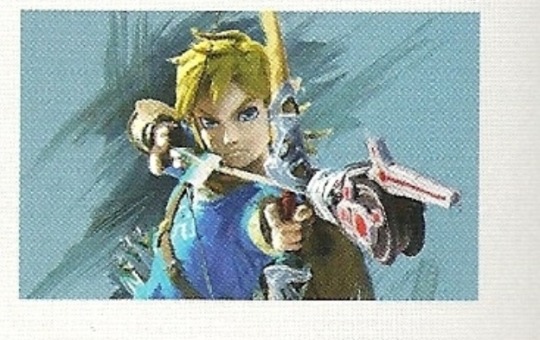
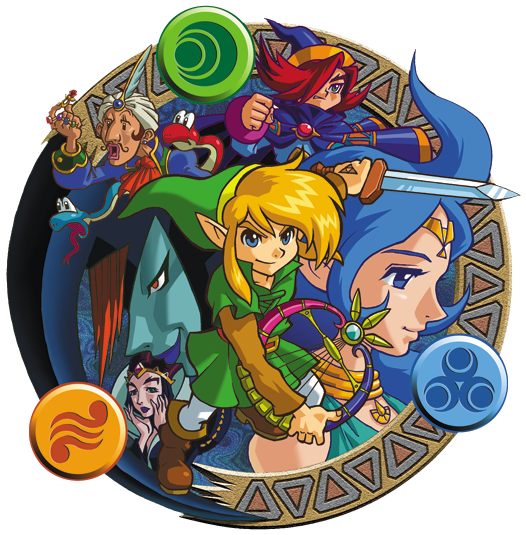
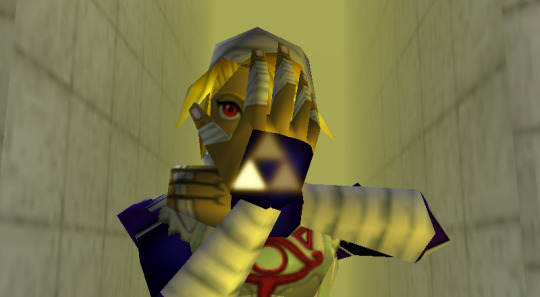
In an interview published in the art book, Wada reveals that he actually drew three versions of one of the early promotional images for Breath of the Wild, to experiment with different art styles. You can view these three variants above.
Eiji Aonuma has been part of The Legend of Zelda for close to two decades, usually in the role of director or producer. Given that he’s worked on the series for as long as he has, it isn’t surprising that he has, on occasion, voiced his desire to dabble in other, non-Zelda-related projects.
“I’m 50 now, so I only have about ten more years to make games at Nintendo. I want to try all sorts of new things before it’s too late—I don’t want to get to the end of my career and only have worked on Zelda. But every time I come up with some good new ideas, they end up being used in a Zelda game! I need a six-month break to get away from the Zelda cycle and focus on something new [laughs]. But I’d probably end up making a game that is similar to Zelda; after all, A Link to the Past was my biggest influence.” - Eiji Aonuma, 2013, EDGE (via NintendoLife)
Now, in a more recent interview with EDGE, Aonuma has once again expressed his interest in developing a game unrelated to Zelda, this time getting a little more into the specifics of just what he’s interested in.
“Actually, Nintendo has been telling me to create a new IP. But then, they’re also telling me to make more Zelda games. I can’t really share much; I’m not sure I’m allowed to say anything. But I really like the idea of a game where I can live as a thief. That’s all I’ll say.” - Eiji Aonuma, 2016, EDGE (via Nintendo Everything)
Given how guarded Aonuma is being, it stands to reason that he and Nintendo do plan to further investigate his thief game idea. Of course, given Aonuma’s involvement with Zelda, it would require someone to lighten his work load, freeing him up to pursue other projects.
Fishing mini-games have long been a part of The Legend of Zelda. The first game to include fishing was Link’s Awakening on the Game Boy.
The feature, according to the development team, was created by Kazuaki Morita, a programmer that has worked on a number of Zelda games, including the first. Morita, whose love for fishing is known among older Nintendo staff, is a board member at a company named SRD Co. Ltd., which takes on videogame development contracts. Since it shares its headquarters with Nintendo, it has worked on a number of Nintendo titles over the years, including Link’s Awakening.
In fact, the conceptualization of Link’s Awakening is actually credited in part to Morita himself, who nudged things along by getting ahold of the only Game Boy development kit at Nintendo at the time, and using it to prototype a Zelda-like game to see what the hardware could do.
Morita, as you might expect, also programmed the fishing game in The Legend of Zelda: Ocarina of Time. Here’s how he narrates the course of events that lead to its inclusion in that game:
Morita: The Water Temple is in Lake Hylia. Aonuma-san designed that dungeon. The boss that appears there is Morpha. Just when I was making that, there was a landform like a pool.
Iwata: Morpha rises up out of the pool and fights Link.
Morita: Right. When I was making that boss, I casually…
Iwata: “Casually”? (laughs) I doubt you had that kind of time!
Morita: But for some reason I did. (laughs)
Everyone: (laughs)
Morita: I just happened to have a model of a fish, so…
Iwata: You “just happened” to have it? (laughs)
Morita: Yes! (laughs) A model of a fish for putting in an empty bottle. I borrowed that and had it swim in the pool in the dungeon, and when I saw it swimming around, I thought, “Oh! I can go fishing!”
Iwata: What did you do for a fishing pole?
Morita: I took the model for something and made it a cylinder, and then… (gestures as if casting a fishing pole)
Haruhana: You used the motion for Link swinging his sword.
Morita: Yep. But at that time, it was just for my own enjoyment. You know, for when I needed to take a breather.
Iwata: How long did it take before the other project members discovered this?
Morita: Hmm, not long.
Aonuma: At first, I didn’t have any idea he was doing that.
Morita: Oh, that’s right. Aonuma-san came over and I was like, “Uh-oh!” and immediately closed the screen.
Everyone: (laughs)
Aonuma: Well, you were supposed to be making a boss!
Iwata: We had pushed back the project several times, so making a boss was pressing business. You should have been doing that! (laughs)
Morita: Nonetheless, for some reason, it just kept coming together and…
Iwata: “For some reason”?! Yeah, because you were pouring your energy into it! (laughs) Is it really that easy to make a fishing game?
Morita: Yeah. I didn’t have to put much effort into it.
Aonuma: Really…?
Morita: No, it’s true. And it turned out just as I imagined.
Aonuma: Oh, so you had a complete idea of it before you made it?
Morita: Yeah.
Fishing is, naturally, a part of Zelda: Breath of the Wild as well. In the new game, you can actually fish using bombs instead of a rod.
Note: This interview originally appeared as part of Nintendo’s Nintendo Online Magazine in Japan in 2001. The subject of the interview is The Legend of Zelda: Oracle of Seasons/Ages director Hidemaro Fujibayashi, who was a staff member of Capcom had previously designed Magical Tetris Challenge. Fujibayashi would later go on to direct The Legend of Zelda: Four Swords, The Minish Cap, Skyward Sword, and is also the director of Breath of the Wild.
Q: I hear that this new Zelda’s development began at Capcom.
Fujibayashi: Yes. From what I heard, our Okamoto [Executive Director Yoshiki Okamoto] told Mr. Shigeru Miyamoto, “I’d like to create a Zelda at Capcom.” That was about two years ago. After that, the staff without a project on their hands started to create a 2D game based on the Famicon Legend of Zelda. The concept was to convey the greatness of the Famicon generation Zelda to the current generation.
Q: Fujibayashi-san, were you a Zelda fan, too?
Fujibayashi: Yes. In the case of the Famicon game, I went straight to the toy store to buy it. I remember running to buy it, fist tight around my New Year’s money.
Q: Did you participate in the [Oracle] project from the get-go?
Fujibayashi: At first, I participated as a kind of secretary that put all the ideas together. Back then, I was only an open ear to the concepts being tossed about, but I gradually began to take part in the actual development of the game. The idea was first to make a presentation to Mr. Miyamoto, so I wrote a proposal based on Okamoto’s concept.
Q: Had the game’s contents already been decided upon at the time of the proposal?
Fujibayashi: The core of the game was pretty much decided. That is to say, the fact that it would be on the Game Boy Color, the use of the four seasons, and the decision to retain the feel of the 2D Zelda games. It was also decided that it would be a series, so I thought the link system up as a way to make use of that idea. I wanted, for example, that if you missed an enemy in the first game, you would encounter it in the next one. That’s the kind of game I wanted to make it. Zelda is a game with a solid world, so I thought we could express the characters’ “existence” like in the N64 games on the Game Boy, too.
Q: What was Miyamoto-san’s reaction?
Fujibayashi: That was my first time meeting him. I went to the presentation with Okamoto, but it was my first time working directly with him, too. And to top it off, he told me we were going to meet a well-known member from another company, so I ended up having palpitations. Miyamoto-san remained silent throughout the entire presentation, too, so I was quite nervous. But when we finished reading our proposal out to him, he said, “I had thought there’d be many loose ends and had planned to strike, but it looks like you’ve got a handle on things.” And he approved it, saying, “I think it’s fine.”
Q: Was that the signal for work to begin at Capcom?
Fujibayashi: Yes. Afterwards, I worked on the scenario while reporting regularly to Okamoto. I was the director and planner then.
Q: I heard that Capcom begins development by writing the scenario.
Fujibayashi: Yes. But I believe the Zelda series really only started to have scenarios after the hardware specifications improved. The original Zelda was a pure action-RPG and didn’t have much of a story to begin with. I wanted to combine both those aspects (action-RPG and an actual scenario) this time around. At first, we’d only planned on creating a game one-tenth the size of the final version. But it just kept growing as development progressed and gradually turned into an original game.
Q: Were Oracle of Seasons and Oracle of Ages developed by different teams?
Fujibayashi: No, we developed them one at a time with the same team. At first it was just me exchanging ideas with the scenario team. Then, as the scenario progressed, I discretely approached the Capcom artists and programmers I was interested in. This sort of HR thing is normally handled by my direct supervisor Funamizu [Producer Noritaka Funamizu] but I thought I’d best sound the staff off first. Funamizu scolded me saying “that’s my job,” but I still got the staff members I wanted to join the team.
Q: From then on it was probably the actual game creation that started, but could you give us a simple progress plan?
Fujibayashi: We began with a rough image of the game. After thinking up the topography, we created the map. After the rough map was done, we thought up the characters. We also altered the scenario as we made the game.
Q: Were there times when you would also redo the whole field?
Fujibayashi: Every day. When actually moving around in it, every time something felt wrong we’d end up correcting it. When we were about 60% done, Mr. [Yoichi] Yamada from Nintendo came in as a supervisor. From that point on, I was able to talk with Mr. Miyamoto. I then started absorbing the outlook he had on Zelda as my own.
Q: Are there any interesting stories regarding the joint development with Nintendo?
Fujibayashi: Back in the day, I’d play Nintendo games and think all their games had a common feel to them. When I met Mr. Miyamoto, I clearly understood that there’s a logic behind the games he thinks up. Understanding that was a huge learning experience for our team. Another thing was that Mr. Yamada and co. would ask us “What’s this character’s name?” about characters we’d just randomly put in the game. Giving those characters a name really brings them to life and the staff’s attachment to them evolves, too.
“You should name your characters”… such a simple sounding idea really opened my eyes to something important. This is just one example, but I feel like I was taught the secret to Nintendo’s “warm game feel”. What made me the happiest was that both Mr. Yamada and Mr. Miyamoto treated me as though I was a member of Nintendo. We talked not as Nintendo or Capcom staff, but as staff working together on the creation of a game. I believe that in the end, this kind of welcoming feeling influenced Zelda.
Q: At the same time, I do believe that this game is also Capcom-ish.
Fujibayashi: Rather than Capcom-ness, I believe it expresses the Capcom Zelda team’s personality. We used slightly deep characters in order to bring out the world’s appeal. It might just be the difference between Kyoto and Osaka [where Nintendo and Capcom’s main offices are located respectively] but the appearance of characters that are borderline outlaws might indeed be of Capcom-ish nature. However, ultimately I don’t believe there are any differences game system-wise.
Q: Please share with us an exclusive inside story about development.
Fujibayashi: There’s a “Dark Tower” in Oracle of Ages, with people made to work there. Their dialogue is along the lines of “There’s no end to this work” or “I can’t go home”. There were also team members that couldn’t go home much during development, so we put those characters in as a parody (laugh). But our team feels really cozy, so the general atmosphere was great. People who’d just come by with a message would end up in a meeting and chat with us for two hours before leaving again.
Q: That warmth might very well have slipped into the game. Well then, what would be the highlight of the Oracle series in your opinion?
Fujibayashi: This title was built upon the whole team’s personality. The highlight would be the many events and mini-games, as well as the dungeon gimmicks. We’ve thought up quite a few major gimmicks that would be feasible on the Game Boy. It’s packed with ideas from the whole team and is quite meaty.
Q: What would you recommend the link system for?
Fujibayashi: I believe that using the “password” and playing the two games as a continuation brings out a deeper feel to the world. It also lets you see the true ending after the story is over. New characters appear and there are definitely more events, so I would really recommend trying it out.
Translation by Claire Rouveyrol. Edited by Ishaan Sahdev. Images courtesy Nintendo.
A fun little tidbit of info from the past—The Legend of Zelda: Ocarina of Time took 40-50 internal Nintendo employees to develop, and more than double that figure when you account for external contractors.
“Forty of fifty. It’s the biggest development group I’ve ever had. We also have a programming company working closely with us. If I include those people, maybe 120 people are working on Zelda altogether.” - Shigeru Miyamoto, Nintendo Power vol. 111, 1998
Leap 18 years into the future, and The Legend of Zelda: Breath of the Wild development team is over twice as large as Ocarina’s. The core team consists of over 100 staff, while the full list of people working on the game amounts to over 300. (Thanks, @NStyles)
At Nintendo’s 76th Annual General Meeting of Shareholders, The Legend of Zelda creator (and Nintendo’s “creative fellow”) Shigeru Miyamoto was asked to comment upon the increasing costs and timelines involved with game development.
While Nintendo do not release transcripts of their General Meetings of Shareholders, Twitter user @NStyles—who attends these meetings in Kyoto—was able to share a summary of Miyamoto’s response.
Upon being asked for his comment on increasing development costs alongside Nintendo’s other directors, Miyamoto shared that over 100 people are working directly on The Legend of Zelda: Breath of the Wild. He added that when you take into account the full list of people that will eventually appear in the game’s credits, the number is 300. (Note: This obviously includes companies to which Nintendo outsource asset creation and other functions of development.)
The cost of developing the game, Miyamoto went on to say, would be recovered by Breath of the Wild selling in excess of 2 million units. Additionally, the effort that went into developing the game would assist in the development of future projects. Whether Miyamoto is talking about re-using technology developed for the game or simply the know-how acquired during development (or both) at this precise moment is unclear.
A follow-up comment by Shinya Takahashi, General Manager of Nintendo’s Entertainment Planning & Development Division, however, made it very clear that Nintendo intend to re-use tech from Zelda for the creation of other, more compact software. Takahashi cited Brain Age as an example of this kind of software—something that required fewer resources to develop, but sold well.
Nintendo, he said, have been emphasizing the re-use of technology, including game engines, to help manage development costs and times in general.
In related news, Miyamoto recently spoke with GameInformer and other publications at E3, specifically pointing to Breath of the Wild’s complex physics engine as one of the primary reasons behind its delay. He then went on to suggest that Nintendo could re-use the physics engine for the development of the next Zelda game, which might speed things up the next time. This more or less cements the idea that the tech being developed for Breath of the Wild has long-term plans in store for it, beyond a single game.
“For this physics engine, we’ve been able to really figure it out. I think if we decide to use this physics engine in future games, it’ll be a lot quicker, but if we decide to use different media or different types of gameplay mechanics, then I think it might take a little bit longer. That’s something we’ll have to figure out as it comes up.” Shigeru Miyamoto, GameInformer
Where exactly Nintendo put Zelda’s engine to use in the future should be interesting to see. It wouldn’t be a stretch to imagine them considering its use for, say, a physics-based Mario game.
Something that’s talked about a lot these days is how open-world games need to be filled with things to do—the idea that every inch of land needs to be “populated” with NPCs and sidequests. Very often, you hear open-world complaints from Internet game gurus to the effect of “it looks barren” or “it feels empty”.
In keeping up with these complaints, the Legend of Zelda development team have found themselves going from one extreme (Twilight Princess: ”it feels empty”) to the other (Skyward Sword: ”there’s nothing but dungeons”). After having worked on both games, taking fan feedback into consideration, and weighing it against Nintendo’s own experience designing worlds, series producer Eiji Aonuma has come to the conclusion that pockets of empty spaces in an open-world game aren’t necessarily a bad thing.
“We talked a little bit about the idea of density, how dense do we make this big world. As we were developing it, we realized that filling [Hyrule] with things to do and explore is going to be a lot of work. It’s going to take a lot of people and a lot of time. But when we actually started doing it and experienced things like moving around on the horse or climbing up to a high place and paragliding down, we realized that our desire to see what’s ahead was more than just wanting to see what’s in the world. So in that sense, we realized that it’s kind of OK if there are pockets of emptiness.”
I’m personally quite glad to see Aonuma of this opinion, since I’ve never really agreed with the “it looks empty” stance on open-world games. Some of my favourite open-world games—Xenoblade, Xenoblade Chronicles X, Batman: Arkham City, and Zelda: Twilight Princess (which was as open-world as Nintendo were willing to go back in 2006)—were never any less fun for me because there wasn’t a sidequest or NPC waiting for you every two miles. In fact, the pockets of emptiness in those games, which were primarily filled with enemies to fight and collectables to find, were a nice change of pace from the frantic, goal-driven pursuit of the main story.
I’m of the mind that if an open-world game has interesting landforms or architecture, and a fun way to get around, it doesn’t need to fill every inch of its landscape with distractions. It’s okay to let players explore for the sake of exploration. Rewards can be as small as a hidden area with crafting materials tucked away, or as big as a story sidequest involving a bunch of NPC dialogue. Ultimately, though, you don’t really need the latter in my opinion—not as long as your world itself is designed to be interesting to explore.
Maybe a GTA, which takes place in a fairly familiar modern-day urban environment, needs to have helicopters and expensive cars to steal at every turn, but if your game takes place in the kind of world the player hasn’t seen before, you have the opportunity to encourage exploration for exploration’s sake—and you should.
Following the release of The Legend of Zelda: Breath of the Wild, series creator Shigeru Miyamoto has, on two separate occasions remarked upon the possibility of a spin-off game starring the character Sheik from Zelda: Ocarina of Time.
In an interview with Gamerant, Miyamoto stated: “Within the development team, too, there have been talks about how it might be cool to have a game that features Sheik as a protagonist. It’s having maybe a Zelda spin-off with Sheik as a protagonist, for example, I don’t think that’s an impossibility.”
Then, in an interview with Gamekult (via Nintendo Everything), he said: “We clearly talked with the team to make a game centered about Sheik, so I cannot say it is impossible to see something of the sort in the future, but in the classic games in the series, Link is the hero and that will not change. For the rest, you have to be patient and see what happens!”
Now, when Miyamoto says Nintendo considers something a possibility, it usually means it’s happening. While Nintendo as a company tends to be fairly secretive, Miyamoto himself has always been happy to hint at what’s to come in conversations with the press. Examples of this include Pikmin 3 and Pikmin 4, as well as hints regarding the development of A Link Between Worlds.
Food for thought:
For context, these talks of Sheik have come up as a result of discussions of a Zelda game starring a female character. Prior to the full E3 reveal of a Breath of the Wild, series producer Eiji Aonuma commented on Link’s androgynous look in the game. Aonuma later clarified that Link had been designed to look androgynous on purpose, so that he could serve as the avatar for both male and female players.
In the meantime, Nintendo and Koei Tecmo also added a character named Linkle–essentially a Link-styled female character–to Hyrule Warriors, which further fueled the male/female Link discussion.
Most today best know Zelda: Breath of the Wild director Hidemaro Fujibayashi as the director of The Legend of Zelda: Skyward Sword. Due in no small part to the “Iwata Asks” interviews with Nintendo’s development staff, Fujibayashi’s work on Skyward Sword has made him fairly well known to the Nintendo enthusiasts of today.
That said, while Skyward Sword was indeed Fujibayashi’s first time directing a Zelda game on a home console, his history with the brand goes much further back to the days of the Game Boy Color. What’s even more interesting is that when Fujibayashi first began working on Zelda, he wasn’t even part of Nintendo—he was a Capcom employee.
Back in the day, Capcom’s Yoshiki Okamoto (Street Fighter II) founded an internal scenario-development studio named Flagship, of which Fujibayashi was a part. Flagship were contracted by Nintendo to work on a series of new Zelda games for portable Nintendo hardware, and began with The Legend of Zelda: Oracle of Seasons/Oracle of Ages. Fujibayashi acted as “Planner” (the Japanese term for designer) on the two games, marking his first stint on Zelda.
Since then, Fujibayashi has gone on to become a Nintendo employee and directed several Zelda games—in fact, he’s directed the most games of any of the other Zelda directors at the company. Below is a quick list of these individuals and each of their projects. (Note that I’m only counting stints as the main director, not sub-director, assistant director, or producer.)
Hidemaro Fujibayashi (5 games)
The Legend of Zelda: Oracle of Seasons/Ages
The Legend of Zelda: Four Swords
The Legend of Zelda: The Minish Cap
The Legend of Zelda: Skyward Sword
The Legend of Zelda: Breath of the Wild
Eiji Aonuma (4 games)
The Legend of Zelda: Ocarina of Time (with Yoichi Yamada)*
The Legend of Zelda: Majora’s Mask
The Legend of Zelda: The Wind Waker
The Legend of Zelda: Twilight Princess
Takashi Tezuka (3 games)
The Legend of Zelda (with Shigeru Miyamoto)
The Legend of Zelda: A Link to the Past
The Legend of Zelda: Link’s Awakening
Daiki Iwamoto (2 games)
The Legend of Zelda: Phantom Hourglass
The Legend of Zelda: Spirit Tracks
Hiromasa Shikata (2 games)
The Legend of Zelda: A Link Between Worlds
The Legend of Zelda: Tri Force Heroes
Toshiaki Suzuki (1 game)
The Legend of Zelda: Four Swords Adventures
* Ocarina of Time has a number of directors associated with it, each responsible for a different aspect of the game. Aonuma is listed as a “Game System Director” along with Yoichi Yamada.
Images courtesy Iwata Asks website. Information sourced via Nintendo game credits.
One of the new features Nintendo have designed for The Legend of Zelda: Breath of the Wild is the ability to cook meals and have them give you different bonuses depending on the ingredients you used.
Given the Zelda team’s self-professed love for Monster Hunter, it’s easy to draw a connection between the way cooking works in that series and the cooking in Breath of the Wild. Nonetheless, while I do believe that Monster Hunter is one of the games that has influenced the new Zelda in a number of ways, this is a great time to remind people that series producer Eiji Aonuma first brought the idea of cooking up way back in 2004.
“To tell you the truth, I’ve been thinking for a long time about how I could work cooking into a game somehow. The fact of the matter is that cooking is actually, if you think about it, pretty boring. There’s not a lot you can really do—it’s slow work and there’s not a lot you can do to make it seem very exciting. I guess if you watch TV in the U.S., there’s a lot cooking shows and they somehow manage to make cooking seem exciting.
“So maybe if, going forward in the future, I can find a way to make cooking seem more exciting and allow people to have fun with it, then of course I would
probably try to put it into a game. Maybe if at some point down the road there is cooking in a game, you guys can all think back and think, “Hey, I bet Aonuma did this!” Then I’d be really happy.” - Eiji Aonuma, GDC 2004 Roundtable Q&A
Aonuma goes on to mention that he’s personally fond of cooking in real life, and does a little bit of it every other day or so. Sometimes, he even throws a curry parties upon the completion of a project.
I suspect what happened is that Aonuma intended to work cooking into a number of Zelda games, but never really got around to it, or never quite figured out just how he wanted to implement it. Given that he plays a lot of Monster Hunter, though, it’s possible those games eventually helped him decide what role he wanted cooking to play—especially since cooking in Zelda works in a very similar fashion.
Thanks to Nintendo World Report for the roundtable recording.
While The Legend of Zelda: Twilight Princess had achieved its goal of aligning itself with the Western market’s tastes and preventing the franchise’s cancellation, Japanese sales were still considered unsatisfactory by Nintendo. The next step for Zelda would be to attempt a comeback in Japan, combating the weakening Japanese videogame market.
“Twilight Princess was completed as Miyamoto and I had envisioned. Having heard that in North America and Europe, the majority of users who bought the Wii also purchased a copy of Twilight Princess, I thought all of our hardship and hard work had paid off.
“However, in comparison, the sales figures were not what I had been hoping for in Japan, and so I believed that many users still had the impression that Zelda was too complicated and, therefore, too hard to play. Based on this, and realizing that Zelda needed to change even more, I was well aware that getting more people interested in the title was going to be difficult.
“[Zelda: Phantom Hourglass], which we are planning to release this year, is full of concessions that we made based on this understanding, and I’m looking forward to seeing what kind of results our efforts bring about.” - Eiji Aonuma, GDC 2007
Due to the success of the Nintendo DS and its ability to reach a vast mainstream audience, Phantom Hourglass did benefit from Nintendo’s design decisions. In Japan, the game sold 302,887 in its first week, and went on to sell 907,821 copies over the course of two years. (This success did not, unfortunately, carry over to its sequel, The Legend of Zelda: Spirit Tracks, but that’s a topic for another time.)
Although Phantom Hourglass had performed admirably in Japan, it had been on a portable platform. By 2009, portables had become Japan’s primary platforms for gaming, and Phantom Hourglass had benefited greatly from being on the Nintendo DS, which was the most widely owned videogame system in Japan of its generation. Achieving the same success with The Legend of Zelda: Skyward Sword on Wii, which was a home console and not as conducive to Japan’s changing trends, was going to be difficult.
Still, Nintendo had to try—and try they did. Skyward Sword was designed to be a much more compact game in comparison to Twilight Princess, and was also designed to provide the player with constant guidance on where to go and what to do next. Zelda herself was designed to be cuter to appeal to a Japanese audience, and was made Link’s childhood friend. The development team also gave Skyloft a sense of school drama. Where Nintendo had once made the decision to rely on its Western audience, it was now trying to save Zelda from losing relevance in Japan. That required certain concessions.
Here’s an excerpt from an Iwata Asks interview, where former Nintendo president Satoru Iwata and Aonuma are discussing the the removal of an overworld in Skyward Sword. It sheds some light on the development team’s design principles at the time:
Aonuma: Usually, when we make a Legend of Zelda game with a continuous body of land, we need an overlapping part to join one game field to the next. This time, we made all kinds of gameplay for the forest, volcano and desert areas, and needed to create roads for going back and forth among those places. Every time, it was quite a struggle to figure out how to handle those roads.
Iwata: Roads are particularly essential to a game like The Legend of Zelda.
Aonuma: That’s right. But the first thing we thought of this time was that perhaps we didn’t need those roads.
Iwata: What do you mean?
Aonuma: Well, [director] Fujibayashi-san and I talked for a long time about how, if we could make the gameplay in each area dense, then we wouldn’t need to physically join them. Then the question was “How do we design it?"
Iwata: And what did you think of?
Aonuma: Course selection in Super Mario games.
Iwata: Course selection?
Aonuma: Yes. In Super Mario games, there’s a course selection screen, and you waltz on over to it and hop in.
It must be pointed out that during those years, Nintendo were making a concentrated effort to prevent the Japanese audience at large from abandoning videogames. The general consensus was that audiences in Japan didn’t like getting lost or having to stumble around before managing to find their way. This was considered the primary reason that 3D Mario games never managed to sell as much as the 2D ones, and even Super Mario Galaxy 2 was designed to make traversal as simple and straightforward as possible, compared to its predecessor.
“As we see it, one reason why a number of people who love 2D Mario do not want to play 3D Mario appears to be because they are afraid to be lost in the 3D world by not knowing the exact directions, while they feel that they can play with 2D Mario with no such issues. One of the development themes of the original Super Mario Galaxy was to create a 3D world where people may not be easily lost, and the spherical shape was adopted as the game play theme for this reason. However, when we look at the Japanese sales, I do not think that we were able to effectively tackle this challenge with the original.” - Satoru Iwata, Nintendo investor briefing
Given that course selection in Mario games is a fairly straightforward process, Nintendo’s designers felt at the time that the same design could be applied to Zelda, and would achieve similar results. Unfortunately, despite these changes in design, The Legend of Zelda: Skyward Sword saw unremarkable sales in Japan—far lower than those of Twilight Princess, and with even less staying power. Whether this was due to the game itself or the stagnating Wii software market is debatable (it was probably the latter), but as it stands, Skyward Sword did very little to turn the series’ fortunes around on home consoles in Japan. At the same time, it also earned Nintendo the ire of its Zelda fanbase.
Of course, all this was back in 2010 and 2011. As of 2016, Aonuma is singing a very different tune with regard to exploration and getting lost, given that The Legend of Zelda: Breath of the Wild—an open-world game that encourages you to wander and explore—is the polar opposite of Skyward Sword.
“In previous 3D titles, I thought that getting lost is a bad thing. Getting lost in those small worlds, it’s not a loss of what to do but it’s more of a directional loss. I see the exit, you’re going to end up at the same exit, but I can’t figure out how to get there. Challenging something in a way that ‘I think this is going to work’ and then discovering that ‘Oh, this isn’t going to work,’ it’s not actually that much of a painful experience. It’s actually fun. It’s a sense of discovery and as we’re developing this, I thought to myself, ‘Maybe this is what it means to create a big world, to find out that getting lost is OK.’” - Eiji Aonuma, IGN
Sales figures courtesy Japanese sales tracker Media Create.
After the release of The Legend of Zelda: The Wind Waker, a combination of different market conditions around the world were putting pressure on the Zelda team to achieve some sort of breakthrough in sales—failing which the franchise was under threat of cancellation. Here’s a quote shared by producer Eiji Aonuma at the Game Developers Conference that narrates how this lead to the creation of The Legend of Zelda: Twilight Princess:
“As some of you know, at E3 2004 we unveiled the game that would become Zelda: Twilight Princess—the realistic Zelda game. We announced that it was being developed by the team that had been developing Wind Waker 2. Actually, there’s a reason that decision was made at the time that it was.
“At one point, I had heard that even Wind Waker, which had reached the million mark in sales, was quickly losing steam, and that things were sluggish even in North America, where the market was much healthier than in Japan. I asked [Nintendo of America] why this was. What I was told was that the toon-shading technique was in fact giving the impression that this Zelda was for a younger audience, and that for this reason, it alienated the upper-teen audience that had represented the typical Zelda player.
“Having heard that, I began to worry about whether Wind Waker 2, which used a similar presentation, was something that would actually sell. In addition, because we knew how difficult it would be to create an innovative way of playing using the existing Gamecube hardware, we knew what a challenge it would be to develop something that would sell in the Japanese market, where gamer drift was happening.
“That’s when I decided that if we didn’t have an effective and immediate solution, the only thing that we could do was to give the healthier North American market the Zelda that they wanted. So, at the end of 2003, I went to Miyamoto and said, ‘I want to make a realistic Zelda’. Miyamoto was sceptical at first—I was so focused on changing the look of the game as being the solution we were looking for, without coming up with a breakthrough in gameplay.
“And he advised me that, ‘if you really want to make a realistic Zelda, then you should start by doing what you couldn’t in Ocarina of Time’. Make it so Link can attack enemies while riding on his horse using the Wind Waker engine, and make your decision based on how that feels.’
“This is something that went against everything the staff had been working on, and I expected it to come as a shock to the team—but surprisingly, my entire staff was enthusiastic about this change, and the project on which progress had slowed was given a much-needed jumpstart.
“Four months later, development had progressed to a point where Link could swing his sword and battle against enemies while riding on his horse in a realistic looking world. When it was announced with a surprise trailer at the 2004 E3, it received a standing ovation from the media audience. This was a very exciting moment for us, but we were still in the very early stages of converting the game into something more realistic. We knew that we had to create a Zelda game that would live up to the expectations of fans in North America, and that if we didn’t, it could mean the end of the franchise.” - Eiji Aonuma, GDC 2007
As of 2011, Twilight Princess had sold over 5.82 million units on the Wii worldwide, and another 1.5 million on the Gamecube. It is still, to date, among the best-selling games in the series.
Nintendo describe The Legend of Zelda: Breath of the Wild as an “open-air adventure,” rather than an open-world game.
This is fairly typical of Nintendo, who come up with new genre names all the time, to better convey the spirit of their games. For example; the original Metroid Prime was described as a “first-person adventure” game, rather than a first-person shooter.
Nintendo’s former president, the late Satoru Iwata, also conceived a new term for mobile games: “free-to-start” rather than “free-to-play,” as he felt the latter was misleading.